Stump Grinding in Macon, GA for Trip Hazards, Mowing Problems, and Replanting
Compare grinding with full removal, identify buried utilities and equipment access, and request the cleanup outcome you want.
Disclosure: Macon Tree Removal Help is an independent lead-generation website. We do not perform tree-service work directly. Requests may be connected with a local tree-service provider.
What to share
Macon, GA- Share what happened, where the tree is, and whether access is blocked.
- Choose tree removal, urgent help, fallen-tree cleanup, storm cleanup, stump grinding, or estimate preparation.
- Your request may be connected with a local tree-service provider when available.
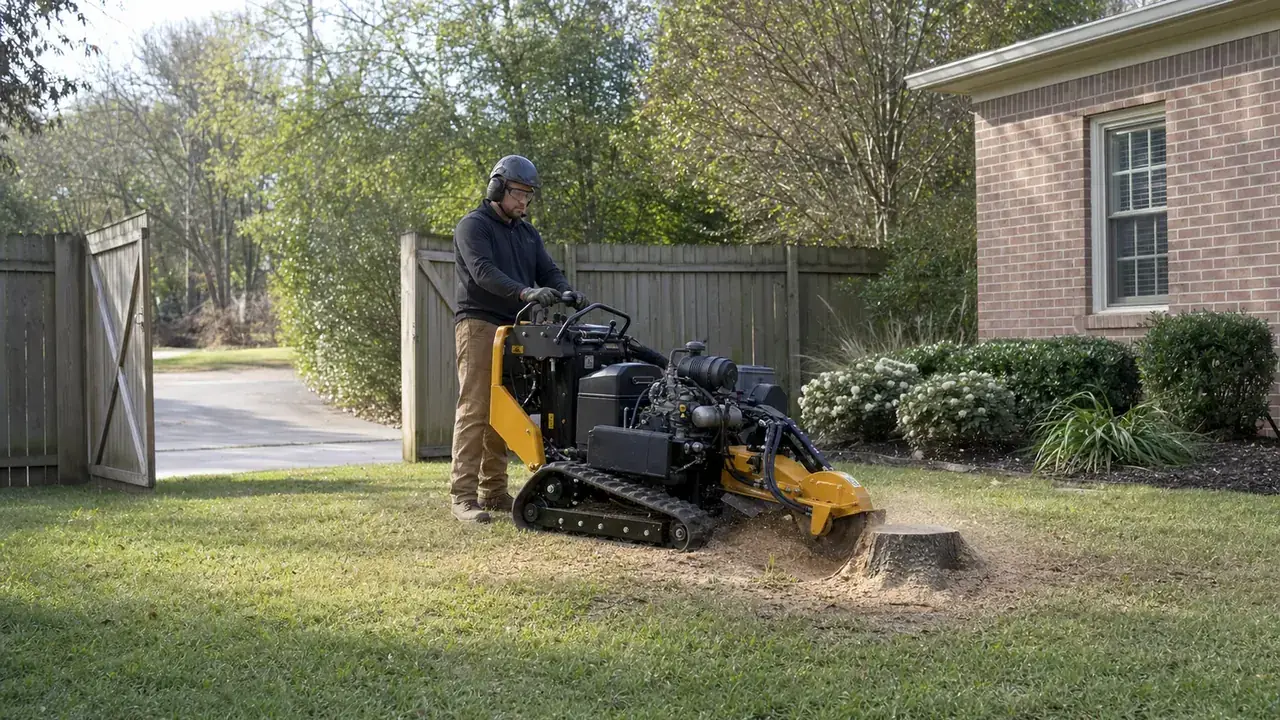
Quick answer: A stump grinder uses a carbide-toothed cutting wheel to turn the stump into chips below grade. Standard work commonly reaches 4 to 6 inches below grade; replanting or hardscaping may call for 12 inches or more where the site allows.
How stump grinding works
The cutting wheel removes wood below the surface
The machine positions a carbide cutting wheel over the stump and removes wood in controlled passes. The operator works through the visible stump and selected root flare to the depth stated in the quote. Grinder size, stump diameter, wood hardness, root spread, rocks, and access determine how quickly the machine can complete that scope.
Grinding depth should match the next use
About 4 to 6 inches below grade commonly works for ordinary lawn repair or mulch. Replanting in the area, installing hardscape, grading, or removing a broad root flare may require 12 inches or more. Utilities, irrigation, stones, soil, equipment limits, and root position can restrict depth. Put the target depth in the written estimate instead of assuming “stump grinding” means the same result from every provider.
Roots remain and decay underground
Grinding does not extract the full root system. Most lateral roots remain in place and decay over years. Surface roots can be included as a separate grinding line, but the quote should identify which roots, how far from the stump, and what depth is planned. Construction or planting in the exact spot may call for the different approach explained in the grinding-versus-removal guide.
Chips settle and grass needs soil
Grinding produces more chips than the original stump volume suggests because the pile includes loosened soil and root material. Chips placed back into the hole settle and shrink as they decay. Grass establishment usually works better after excess chips are removed and the surface is restored with topsoil. Ask whether hauling, hole filling, topsoil, grading, and seeding are included.
Some species can sprout again
Most roots lose vigor after the stump is ground, but sprouting species can send up new shoots from remaining roots. Deeper grinding or an appropriate follow-up treatment may be discussed when regrowth is likely. The species, root system, and intended yard use determine whether ordinary grinding is enough.
Access and buried systems shape the service
Measure the narrowest gate and show the route from the driveway. Note steps, slopes, soft ground, retaining walls, fences, irrigation, invisible-fence wires, landscape lighting, septic components, utilities, and nearby hardscape. Complete required utility locating and identify private systems before grinding begins.
Stump grinding cost in Macon
Stump grinding commonly costs about $150 to $500 nationally. Today’s Homeowner gives about $192 as its Macon-Bibb benchmark and publishes a difficulty-based local range of $214 to $351. Diameter, hardness, roots, depth, access, utilities, cleanup, and multiple stumps affect the final quote.
Use the decision guide to choose grinding or extraction, the methods-without-a-grinder guide for slower alternatives, and the duration guide for scheduling. Each page owns a different stump question.
Disclosure: Macon Tree Removal Help is an independent lead-generation website. We do not perform tree-service work directly. Requests may be connected with a local tree-service provider.
Stump grinding request
Share stump size, access, and cleanup goals
Use this request when a stump is blocking mowing, creating a trip hazard, taking up landscape space, or remaining after tree removal. Access details matter because stump grinders need room to reach the work area safely.
- Estimate stump diameter if safe to do so.
- Note gate width, slope, nearby fences, roots, utilities, or hardscape.
- Say whether the area should be ready for grass, mulch, or replanting.
Common homeowner questions
How far below grade does stump grinding usually go?
Standard grinding commonly reaches about 4 to 6 inches below grade. Replanting, hardscaping, grading, or deeper root-flare removal may call for 12 inches or more where equipment, utilities, soil, and roots allow. Ask the written quote to state the included depth.
Do roots remain after stump grinding?
Yes. Grinding removes the stump and selected root flare below grade while most lateral roots remain underground and decay over years. Full root extraction is a different, more disruptive service.
What happens to the chips and hole?
Grinding produces a large chip-and-soil pile that can fill the hole but settles as wood decomposes. Grass usually needs excess chips removed and replaced with topsoil. Ask whether chip hauling, topsoil, grading, and hole filling are included.
What does stump grinding cost in Macon?
Stump grinding commonly costs about $150 to $500 nationally. Today’s Homeowner gives about $192 as its Macon-Bibb benchmark and publishes a difficulty-based local range of $214 to $351. Diameter, hardness, roots, depth, access, utilities, chips, and multiple stumps affect the quote.