Decision guide
Tree Trimming and Pruning Decisions in Macon, GA
Use this comparison when you need to decide whether selective pruning may preserve a tree or the condition calls for removal planning.
Disclosure: Macon Tree Removal Help is an independent lead-generation website. We do not perform tree-service work directly. Requests may be connected with a local tree-service provider.
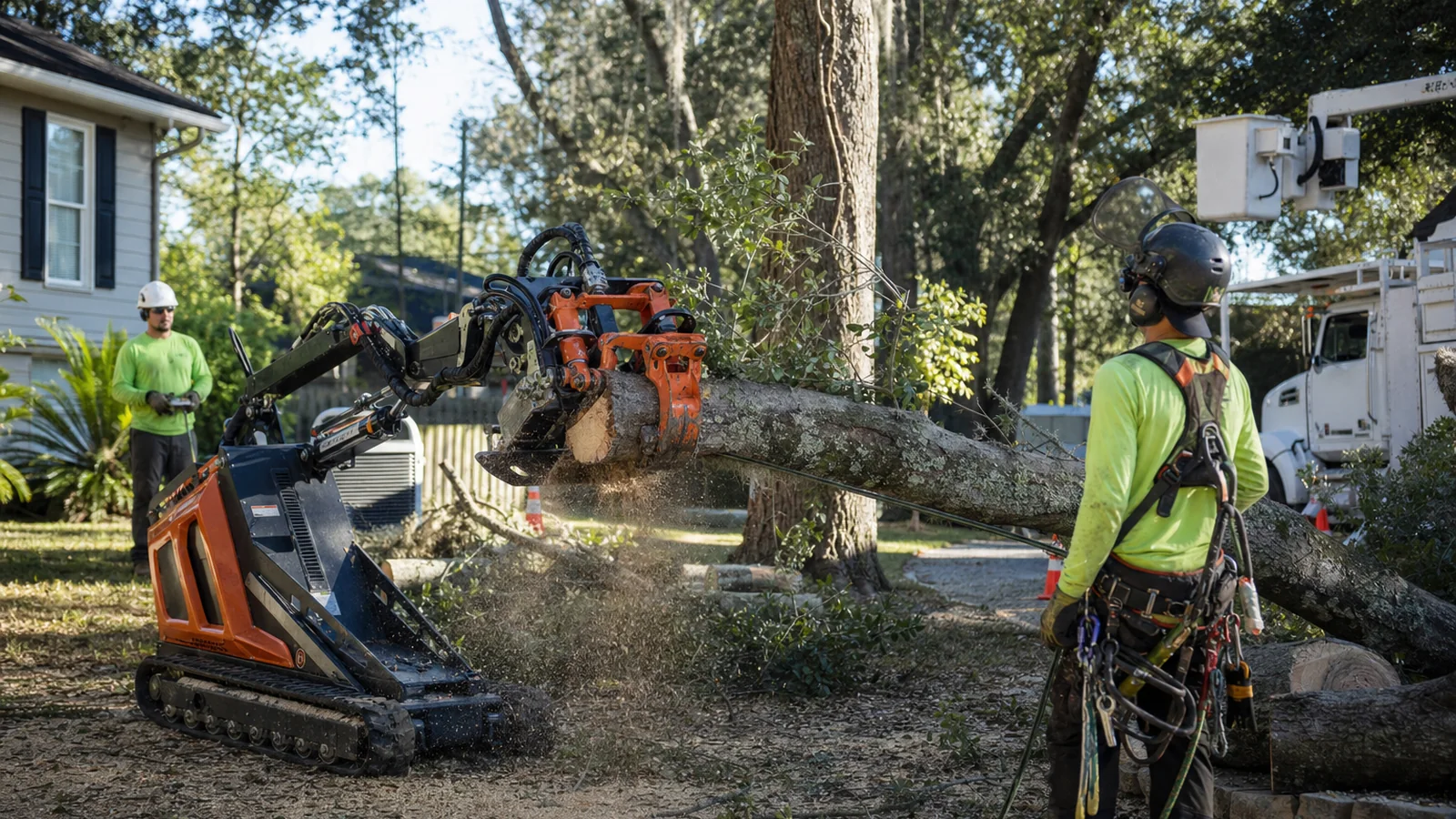
What to share
Macon, GA- Share what happened, where the tree is, and whether access is blocked.
- Choose tree removal, urgent help, fallen-tree cleanup, storm cleanup, stump grinding, or estimate preparation.
- Your request may be connected with a local tree-service provider when available.
Quick answer: Dead limbs do not mean the whole tree is dead. Selective pruning may preserve a tree with a sound trunk and mostly live canopy. Removal becomes more likely when roughly half or more of the canopy is dead or the trunk has major structural damage. For a tree that is still standing and already planned for removal, use the planned standing tree removal guide.
Dead limbs can be a pruning problem
A tree can remain viable while carrying isolated dead, crossing, broken, or poorly attached limbs. Pruning may also address clearance from roofs, walkways, driveways, lights, or signs when the trunk, roots, and remaining crown are suitable to retain. The pruning objective should name the specific branches or clearance problem rather than promise that cutting will “make the tree safe.”
Use the half-canopy rule as a screening guide
A common arborist rule of thumb treats roughly 50% or more dead canopy as a strong reason to discuss removal. Major trunk decay, a structural split, root-plate movement, or a new lean can support removal even when the dead-canopy percentage is lower. This is a screening guide, not a law or an online diagnosis.
Major trunk or root damage can outweigh a green crown
Leaves alone do not prove that a tree is structurally sound. Vertical trunk cracks, large cavities, separated unions, fungal conks, heaving soil, exposed lifting roots, or storm movement can shift the decision toward removal. Review the warning-sign guide from a safe distance and request an on-site assessment.
Topping is a red flag
“Topping” means indiscriminately cutting the crown back to stubs or large lateral limbs. It stresses the tree, opens large wounds, removes productive canopy, and produces weakly attached regrowth. A provider recommending topping as routine care is a warning sign. Ask for the pruning objective and the branches involved, or a clear explanation of why removal is the better choice.
Compare trimming and removal costs
Tree trimming commonly costs about $255 to $655, with a national average near $420. Macon-Bibb removal planning ranges run about $236 to $991, with an average near $621; the national removal range is commonly $400 to $1,200. Size, access, condition, equipment, hauling, and hazard level shape both estimates.
Ask for an outcome, not a vague “trim”
Describe the dead limbs, clearance conflict, storm damage, crown decline, or structure risk. Ask the provider to state whether the scope is deadwood removal, selective pruning, clearance pruning, risk reduction, or whole-tree removal, plus what cleanup and hauling are included.
Use standing tree removal for removal methods, emergency guidance for active hazards, fallen-tree cleanup when the tree is down, and the cost guide for full estimate ranges.
Disclosure: Macon Tree Removal Help is an independent lead-generation website. We do not perform tree-service work directly. Requests may be connected with a local tree-service provider.
Tree-service request
Describe trimming or removal concerns
Send what the tree is affecting, whether it is standing or fallen, whether limbs are hanging, and whether you want to preserve the tree if possible.
Common homeowner questions
How do I know whether a tree needs trimming or removal?
Dead limbs do not automatically mean the whole tree is dead. Selective pruning may fit when the trunk and most of the canopy remain sound. As a common arborist rule of thumb, removal is often recommended when roughly half or more of the canopy is dead or the trunk has major structural damage. An on-site assessment should make the final call.
Should I trim a tree touching utility lines?
No. Stay away and contact the utility company or emergency services when wires, sparking, fire, or immediate danger are involved.
Is tree topping a safe alternative to removal?
No. Topping indiscriminately cuts back the crown, stresses the tree, opens large wounds, and produces weakly attached regrowth. A provider recommending topping as routine tree care is a red flag. Ask for selective pruning that follows a clear objective or an explanation of why removal is warranted.
How do trimming and removal costs compare?
Tree trimming commonly runs about $255 to $655, with a national average near $420. Macon-Bibb removals commonly fall around $236 to $991, with an average near $621, while national removal planning ranges run about $400 to $1,200. Tree size, condition, access, equipment, cleanup, and hazard level determine the quote.