Tree removal in Macon, GA for standing problem trees
Use this page for dead, leaning, damaged, tight-access, or structure-adjacent trees that are still standing. Fallen trees, urgent hazards, and stump-only work have separate pages.
Disclosure: Macon Tree Removal Help is an independent lead-generation website. We do not perform tree-service work directly. Requests may be connected with a local tree-service provider.
What to share
Macon, GA- Share what happened, where the tree is, and whether access is blocked.
- Choose tree removal, urgent help, fallen-tree cleanup, storm cleanup, stump grinding, or estimate preparation.
- Your request may be connected with a local tree-service provider when available.
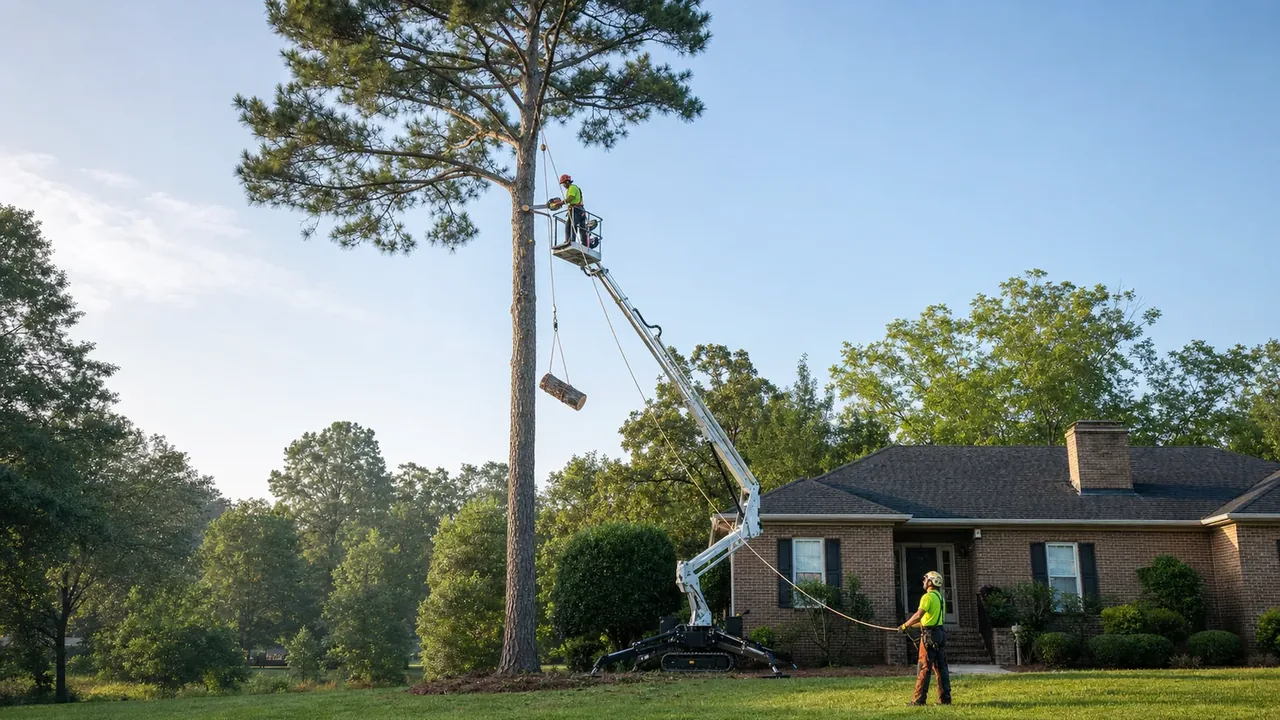
Quick answer: A standing tree in open space may be removed by straight felling into a full drop zone. Trees near homes, fences, utilities, or tight access usually require sectional dismantling, with limbs and trunk sections controlled one piece at a time.
Choose the right tree-service page
Start with the tree’s current condition
- Still standing: stay on this page for planned removal of a dead, leaning, damaged, or structure-adjacent tree.
- Already down: use fallen-tree removal and cleanup for a tree resting on the ground, a structure, or another tree.
- Creating an immediate hazard: use emergency tree guidance for blocked critical access, wires, structural danger, or unstable storm damage.
- Only the stump remains: use stump grinding for grinding depth, access, chips, roots, and restoration questions.
Use the Macon tree-removal cost guide to compare planning ranges and prepare the same written scope for each estimate.
Standing tree removal
Straight felling needs a clear drop zone
Straight felling means the tree comes down as one unit into open space. The work area needs enough unobstructed room for the full tree and crown, plus separation from people, structures, vehicles, utilities, roads, and neighboring property. The provider evaluates lean, crown weight, tree condition, wind exposure, and escape space before deciding whether a full drop is suitable.
Sectional dismantling controls the tree in pieces
Near a house or in a confined backyard, a climber or bucket operator may remove limbs and trunk sections progressively. Rigging can lower sections into a controlled landing area instead of letting them fall freely. More cuts, rope handling, equipment setup, and material movement explain why structure-adjacent trees usually cost more than similar trees in open ground.
When cranes and grapple saws enter the plan
A crane can lift heavy sections over a roof, fence, or inaccessible yard when the load and setup allow it. A grapple saw holds a section mechanically while cutting and can reduce exposure in some equipment-accessible sites. Either option requires suitable truck placement, ground support, overhead clearance, lifting room, and a debris staging plan. Equipment names in an estimate should match a clear reason for using them.
Drop zones and rigging affect access and cleanup
A drop zone is the space reserved for tree material and equipment movement. A rigging zone is smaller and more controlled, but the crew still needs room to lower, process, chip, stack, or load each section. Narrow gates, slopes, septic areas, soft soil, pools, retaining walls, landscaping, and parked vehicles can limit those zones and add hand-carrying or smaller equipment.
Make the written scope separate every outcome
- Tree felling or sectional dismantling
- Limbing and bucking the trunk into manageable sections
- Branch chipping, trunk hauling, or log stacking
- Final rake or blow-off and protection of access surfaces
- Stump grinding, surface roots, chips, topsoil, and hole filling
- Crane, bucket, grapple saw, traffic control, or permit responsibilities
A quote for cutting only can be much lower than a quote that includes hauling and stump work. Ask providers to price the same written outcome before comparing totals.
Standing tree removal cost in Macon
Macon-Bibb removals commonly run about $236 to $991, with an average near $621. Nationally, most removals fall around $400 to $1,200; a small accessible tree may start near $200, while a large or complex removal can reach $3,000 or more. Height, trunk diameter, condition, access, structures, equipment, hauling, and stump work determine the on-site quote.
Use the page that matches the tree’s current condition
Use emergency tree guidance when wires, active structural danger, blocked critical access, or another immediate hazard comes first. Use fallen-tree cleanup when the tree is already down. Use stump grinding when only the stump remains. Compare trimming with removal when the tree may be preserved.
For visible decay, cracks, crown decline, or a changing lean, review dangerous tree warning signs. Use the Macon cost guide to prepare comparable estimates.
Disclosure: Macon Tree Removal Help is an independent lead-generation website. We do not perform tree-service work directly. Requests may be connected with a local tree-service provider.
Request standing tree removal help
If the tree is already down, use fallen tree removal. If access is blocked or a hazard feels urgent, use emergency tree removal. If only the stump remains, use stump grinding.
Common homeowner questions
What is the difference between straight felling and sectional dismantling?
Straight felling brings down the whole tree into a clear drop zone. Sectional dismantling removes limbs and trunk sections in controlled pieces with climbing, a bucket, and rigging when structures, fences, utilities, or limited space rule out a full drop. The second method takes more setup and handling, which commonly increases cost.
When might a crane or grapple saw be used?
A crane may lift large sections away from a roof, confined yard, or unstable tree when controlled overhead handling is needed. A grapple saw can hold and cut sections mechanically where equipment reach and site conditions allow. The provider chooses equipment after reviewing tree condition, load, access, landing area, and nearby property.
What should a written tree-removal scope include?
The scope should separate bringing down the tree, limbing, cutting the trunk into sections, chipping, hauling, log stacking, final cleanup, stump grinding, surface-root work, equipment access, and permits when applicable. A lower quote may leave wood, chips, or the stump behind.
What does standing tree removal cost in Macon?
Macon-Bibb removals commonly fall around $236 to $991, with an average near $621. Nationally, most removals run about $400 to $1,200, while small accessible trees can start near $200 and large or complex work can reach $3,000 or more. An on-site quote must account for height, trunk diameter, condition, access, structures, cleanup, and stump work.